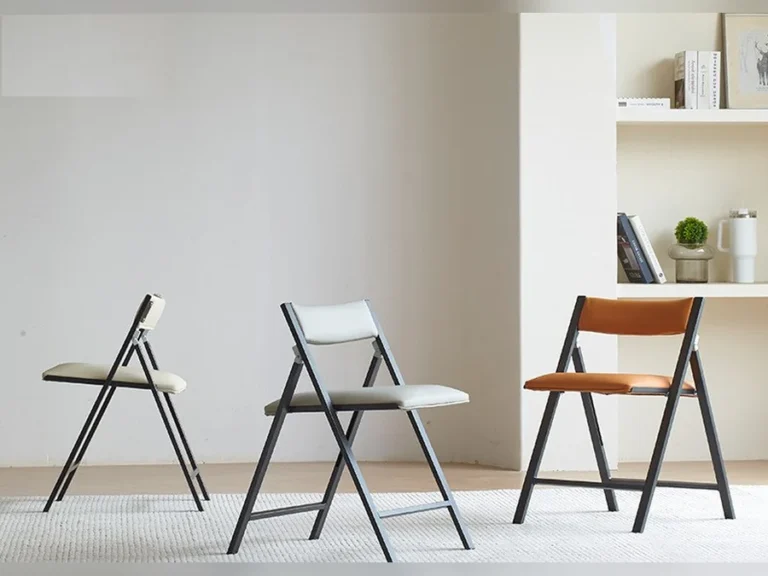
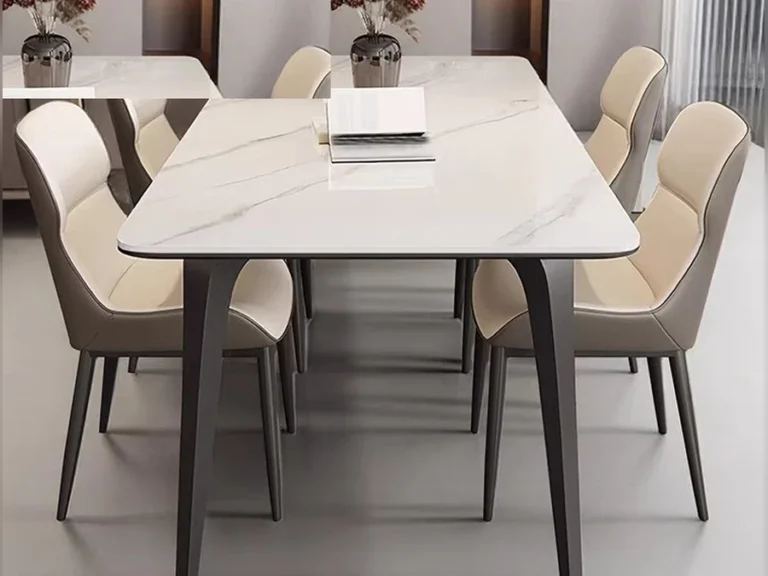
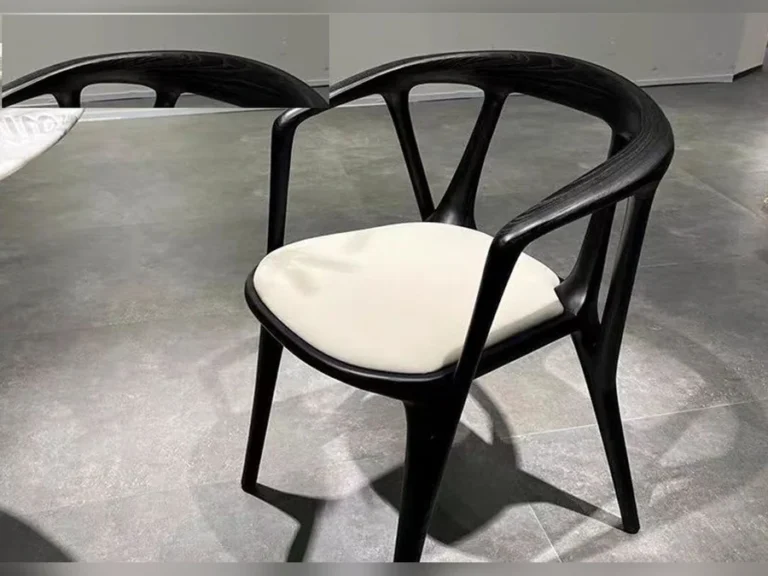
Chrome looks better on day one. Powder coat looks better on day nine hundred. That is the whole argument, and it is decided by what happens at the edges.
Both finishes are applied for the same reason — to stop the steel rusting and to make it look intentional. They do it in completely different ways, which is why they fail differently.
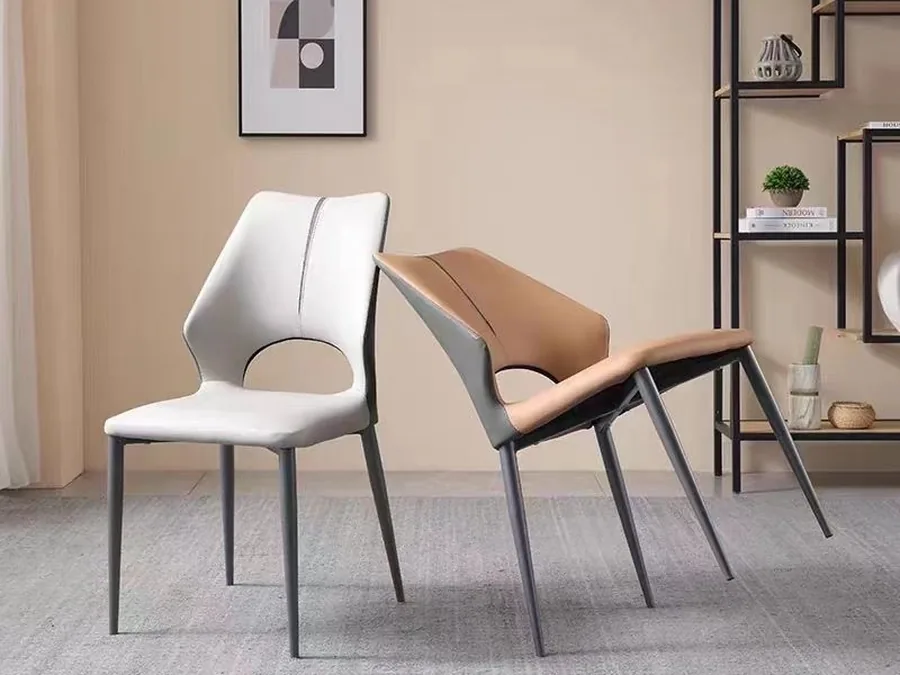
How each finish is applied
Powder coating is a dry process. The frame is cleaned and phosphated, powder is sprayed electrostatically so it clings to the metal, then the whole thing is cured in an oven at roughly 180–200 °C. The result is a film typically 60–100 μm thick — about the thickness of a sheet of paper folded a few times.
Chrome plating is an electrochemical process. The steel is plated in layers — usually copper, then nickel, then a thin decorative chrome layer measured in fractions of a micron. The visible chrome is extremely thin; the corrosion protection is mostly in the nickel underneath.
That difference in thickness explains almost everything that follows. A powder film is thick enough to absorb a knock. A chrome layer is not, and when it is breached, the steel underneath is exposed.
Durability in day-to-day service
| Failure mode | Powder coat | Chrome |
|---|---|---|
| Edge chipping | Chips at a hard knock, exposing bare metal | Does not chip — it flakes or lifts in patches |
| Scratching | Fine scratches dull the sheen, rarely reach metal | Fine scratches are visible immediately, and can breach the layer |
| Wear points | Wears through at the foot and the seat bracket | Wears through at the same points, showing dull nickel |
| First visible damage | A chip at a corner or a leg edge | A dull patch, then a rust bloom at a pore |
| Repair | Touch-up pen or re-coat | Re-plating, or replacement |
The counterintuitive finding in service: chrome shows damage earlier, powder coat shows it for longer. A chrome frame looks new until the first pore rusts, then it looks old quickly. A powder-coated frame with a chip at the leg edge looks slightly used and stays that way for years.
Colour, matching and touch-up
This is where powder coating wins decisively for commercial projects.
- Powder coat can be matched to almost any colour, including a brand palette, with a reference code that can be re-ordered. A RAL or Pantone match is standard practice.
- Chrome is a finish, not a colour. Black chrome, brushed nickel and satin chrome exist, but none of them accept a custom colour.
- Touch-up — a powder chip can be filled with a matched touch-up pen, and the repair is invisible from a metre away. A chrome breach cannot be touched up at all; it can only be re-plated or replaced.
For a hotel that has to keep a lobby bar looking consistent across a phased refurbishment, the ability to re-order the same colour in eighteen months is worth more than the initial shine.
Corrosion and cleaning
Both finishes are protective, but they are attacked by different things.
Chrome is vulnerable to chloride — salt air, sweat, and many commercial cleaning chemicals. A breach in the chrome layer becomes a corrosion cell, and the rust spreads under the plating so the visible damage is always larger than it looks.
Powder coat is chemically more resistant but mechanically more vulnerable. A chip creates a small exposed area, and the coating around it does not lift. Rust stays local.
Cleaning matters for both. Abrasive pads and strong alkaline cleaners dull chrome and chalk powder coat. A neutral detergent and a soft cloth is the correct answer for either, and it is rarely the answer the cleaning team uses.
Choosing for your project
A short decision path:
- Is there a colour requirement? If yes, powder coat — chrome cannot deliver it.
- Is the site coastal or heavily chlorinated (pool bars, spas)? If yes, powder coat over a proper pre-treatment, or a higher-grade substrate.
- Is the look essential to the design (chrome and glass, art deco, industrial)? Then chrome, with a maintenance budget for re-plating.
- Will the frames be knocked against tables daily? Powder coat absorbs it; chrome does not.
- Does the project have phases? Powder coat, because it can be re-matched.
One practical note: the pre-treatment matters more than the coating. A powder coat applied over a poorly cleaned frame will fail at the edges within a year, regardless of the powder brand. Ask what the pre-treatment is, not just what the coating is.
If the frame choice sits inside a wider material decision, our comparison of metal versus wood chairs covers the structural side, and the metal dining chairs range shows which models are available in which finishes. Bar stools follows the same finish logic at counter and bar height. To request finish samples, send the colour reference and the site conditions and we will come back with the available finishes and the pre-treatment we use.
Coating performance is measured, not eyeballed: impact, adhesion and salt-spray tests follow published methods from bodies such as ASTM.
Models from this range
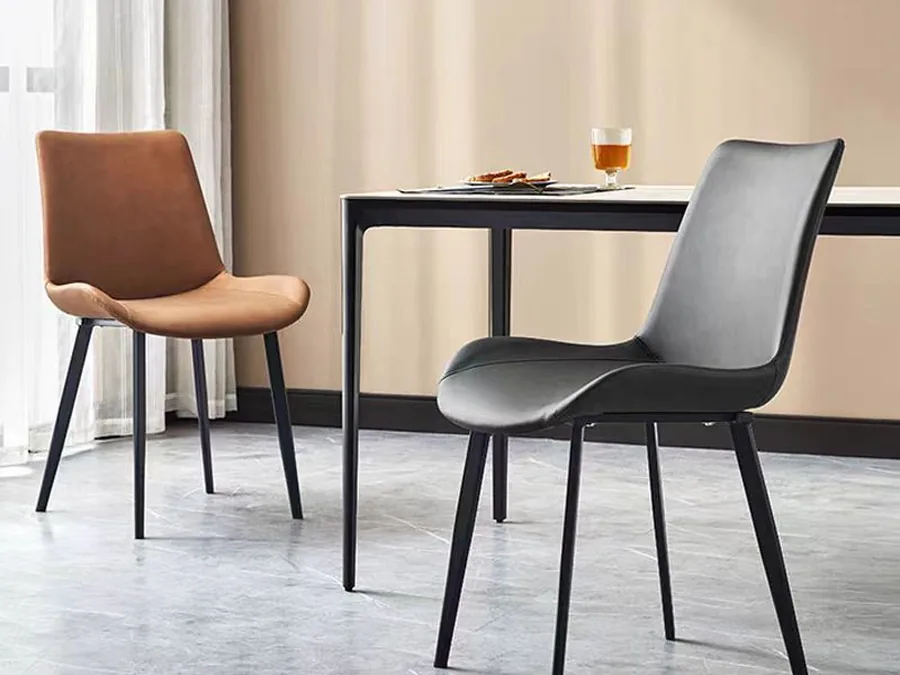
If you are shortlisting for a project, these two pages show how the choices above look in production:
- multi-layer metal chair frames — Minimalist Multi-Layer Metal Dining Chair for Living Room
- stainless steel frames with a wave backrest — Light Luxury Stainless Steel Dining Chair with Wave Backrest