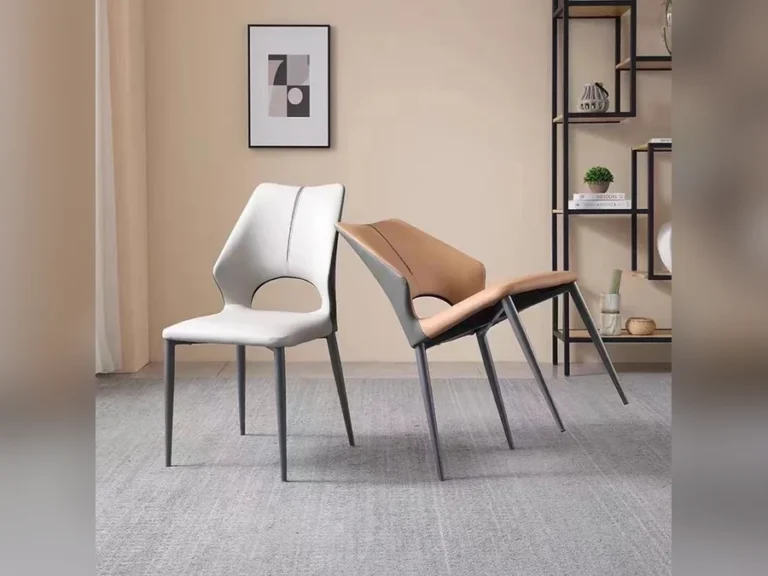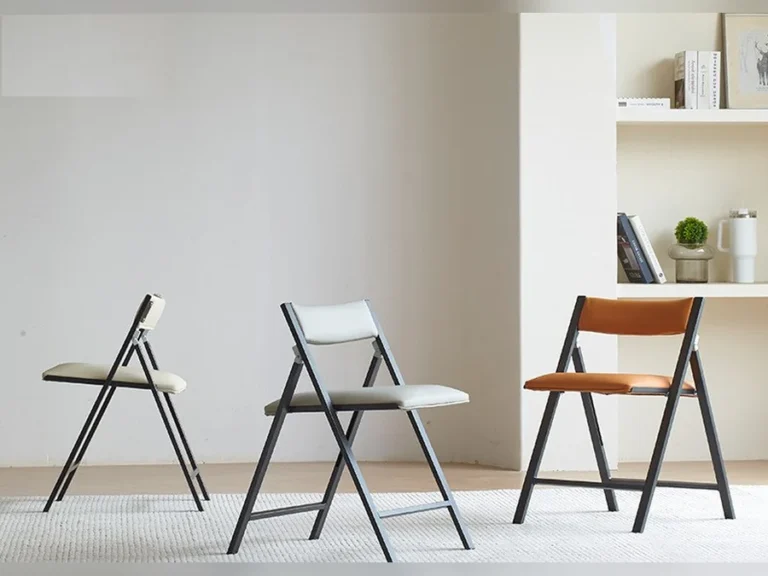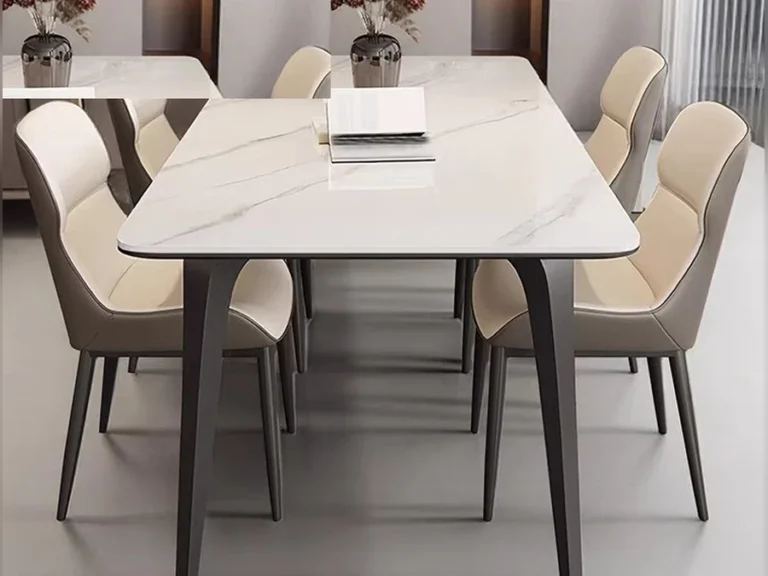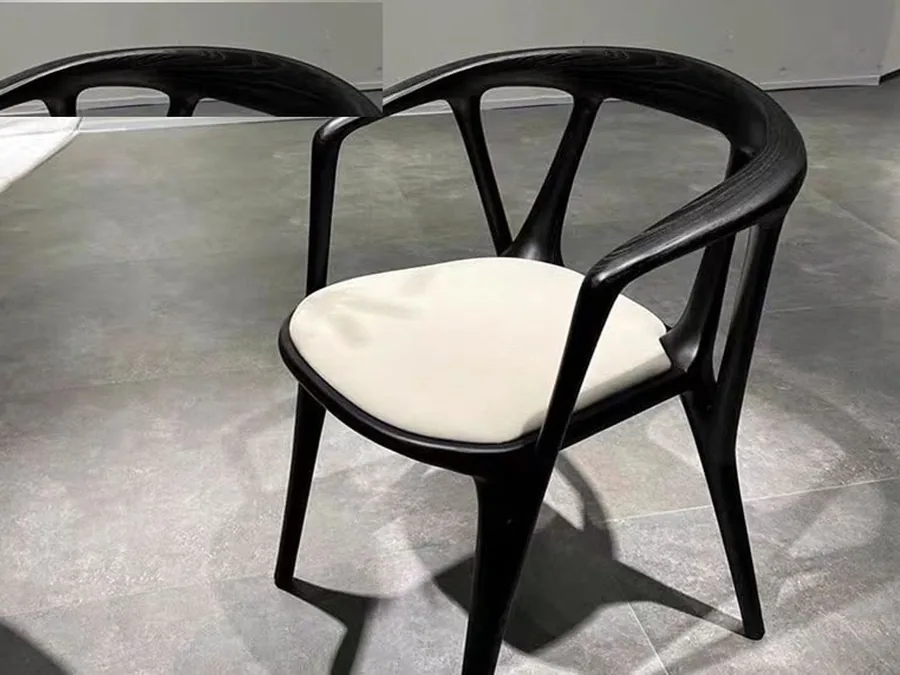
The wood-versus-metal argument is usually settled on looks. In a venue that turns tables four times a night, it gets settled on something else entirely: how many times the chair can be dragged across the floor before something gives way.
Both materials last. They just fail in different places, on different schedules, and with very different repair bills.
What actually breaks first
Ask a repair shop what arrives most often and the answer is rarely “the material”. It is a specific joint.
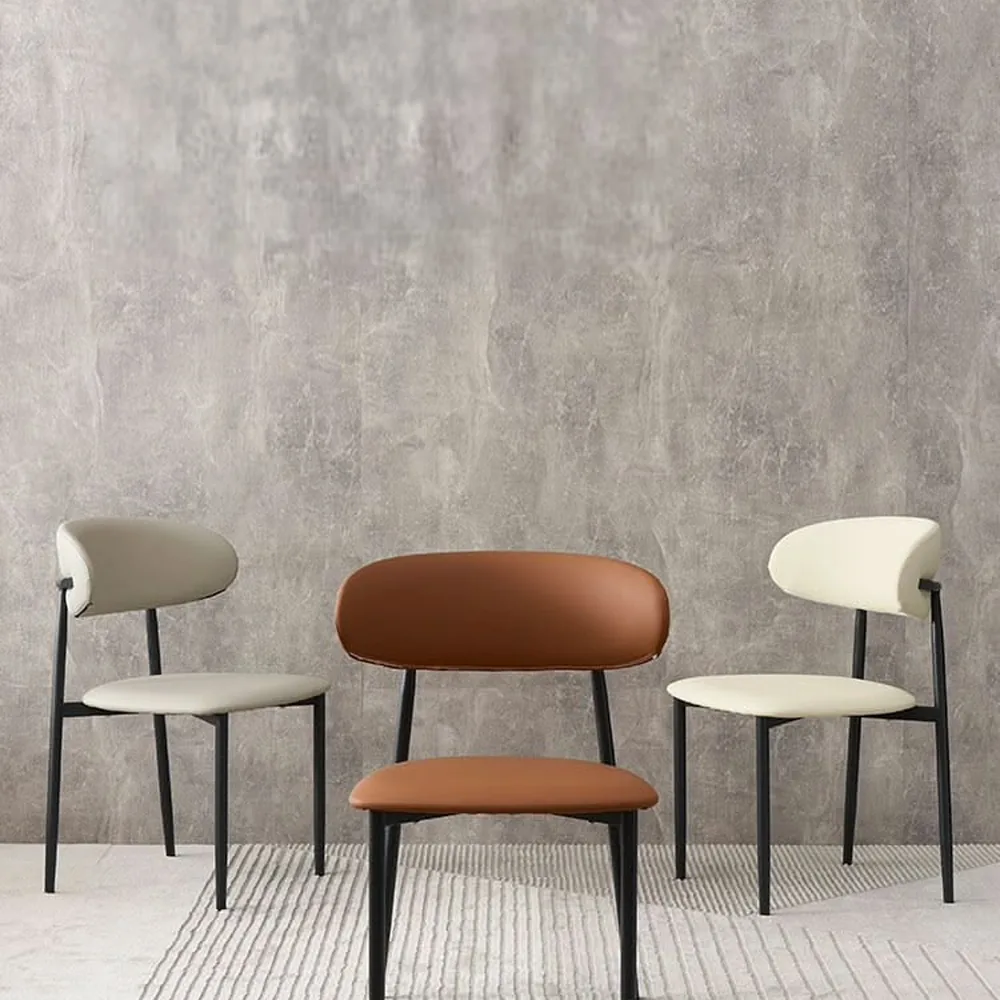
On metal frames, the weak points cluster in three places:
- Welds at the seat corners — the highest-stress point whenever a guest pushes back from the table
- The joint between leg and seat rail, especially on chairs that get lifted by the backrest
- Feet and glides — the cheapest part to replace and the most often ignored
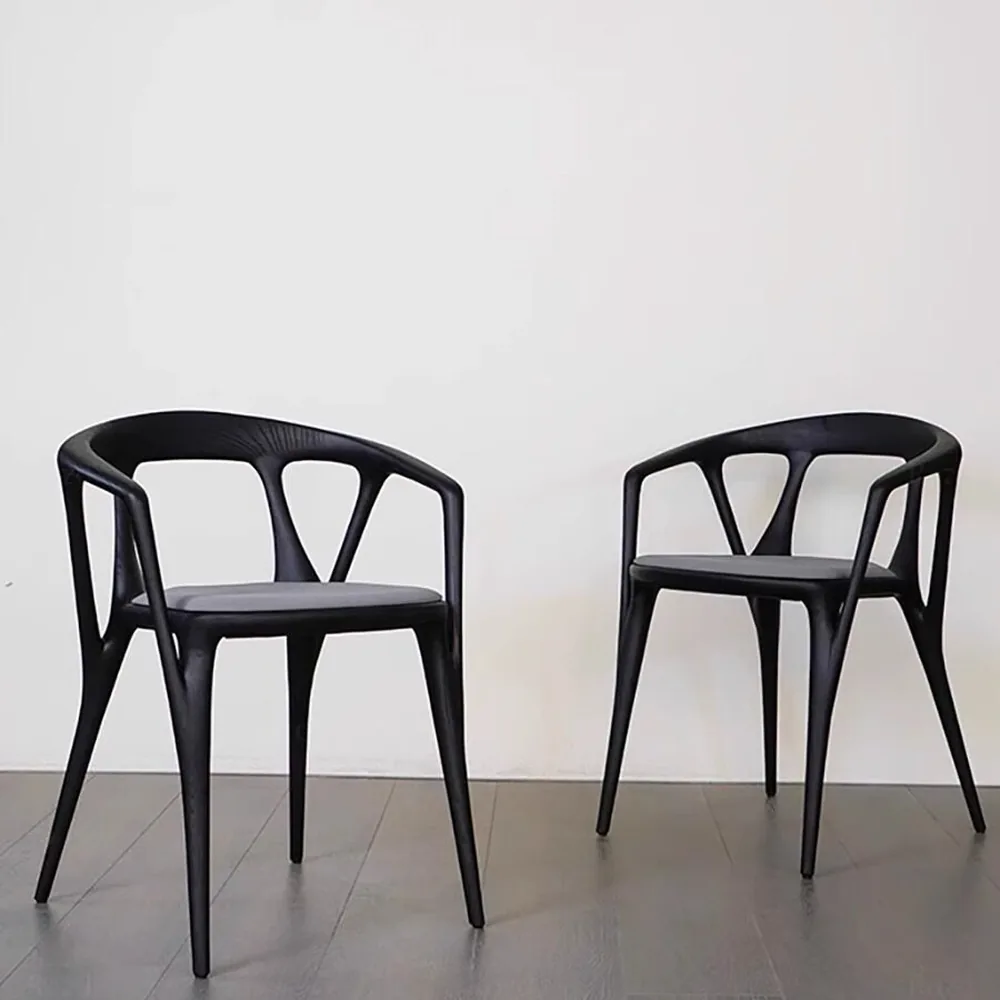
On solid wood frames, the list shifts:
- Mortise-and-tenon joints dry out and loosen when humidity swings
- Side rails crack at the screw line if the seat is over-tightened at assembly
- The seat itself — a solid wood seat expands and contracts across the grain
The lesson is not “wood is fragile”. It is that a metal chair usually fails at a weld you can see, and a wooden chair usually fails at a joint you cannot. One is repairable in a workshop, the other often is not repairable at all once the tenon has opened.
Weight, drag and daily damage
Weight is the dimension buyers under-rate. A heavier chair feels more solid in the showroom, and it is more expensive to move, to ship, and to replace when the floor plan changes.
Two numbers do most of the work here:
| What you are comparing | Why it matters in service |
|---|---|
| Chair weight | Freight cost per container, and how staff handle a stack |
| Foot and glide design | Whether the frame or the floor absorbs the daily drag |
| Seat height and pitch | How often guests push the chair back with their legs rather than their hands |
Feet deserve a separate decision. Nylon glides protect hard floors but wear flat; felt glides are quiet but trap grit; hard plastic on tile is the fastest way to wear through a leg. On a wooden chair, a worn glide means the leg itself is being ground down. On a metal chair it usually means a five-minute replacement.
Comparison across five practical dimensions
| Dimension | Metal frame | Solid wood frame |
|---|---|---|
| Strength for weight | High, in a thin profile | High, but needs bulk to get there |
| Weight | Lighter for the same strength | Heavier, and heavier again when wet-finished |
| Expected service life | Long, with replaceable feet and welds | Long, if humidity is controlled |
| Unit price band | Usually lower at the same visual grade | Higher, driven by species and joinery |
| Yearly maintenance | Repaint or re-powder at the wear points | Re-tighten joints, refinish, control humidity |
The honest summary: metal wins on repairability, wood wins on how it ages. Neither wins on price once you count the second order.
Where plastic fits as a third option
Plastic and resin seats are not a downgrade for every venue. They make sense where the chair is cleaned with a hose, stored outdoors, or moved several times a day.
They also fail differently. The shell rarely breaks. What fails is the fixing — the insert where the leg meets the seat, or the screw thread that has been undone and redone too many times. That matters because a cracked shell is obvious, while a loosening fixing is not, and a loose fixing is what eventually takes the whole chair out of service.
How to decide for your room
Work through four questions in this order, and the material usually picks itself:
- How many turns per service? Above three, prioritise repairability over appearance.
- Who cleans, and how? A hose-and-bucket routine rules out unsealed wood.
- What is the humidity story? Coastal sites and unheated stores punish solid wood joinery.
- What is the replacement plan? If you intend to replace in five years, buy for the five years you will actually use.
Whichever way that lands, ask for the same three things before ordering: wall thickness or joint construction, the load rating with its test method, and the spare-parts list. Suppliers who can answer all three are usually the ones still answering emails in year two.
You can compare how these choices translate into actual models in our solid wood dining chairs range, or look at wooden stools if the same room needs bar-height seating. If the frame finish is the open question, our guide to powder-coated versus chrome chair frames explains how each behaves on edges, and the commercial upholstery and finish options page covers what can be matched across repeat orders. Review our chair range if you would rather start from what already exists, or send the brief over and we will come back with models, packing details and lead times.
Models from this range
If you are shortlisting for a project, these two pages show how the choices above look in production:
- solid wood chairs with padded seats — Wabi-Sabi Solid Wood Dining Chair with Soft Leather Padding
- carbon steel dining chair frames — Minimalist Mid-Century Carbon Steel Dining Chair