A banquet chair spends more of its life in a stack than at a table. That is the part of its life nobody specifies, and it is where most of the damage happens — quietly, in a store room, between seasons.
Stacking is not storage. A stack is a load path, and every chair in it is carrying the ones above.
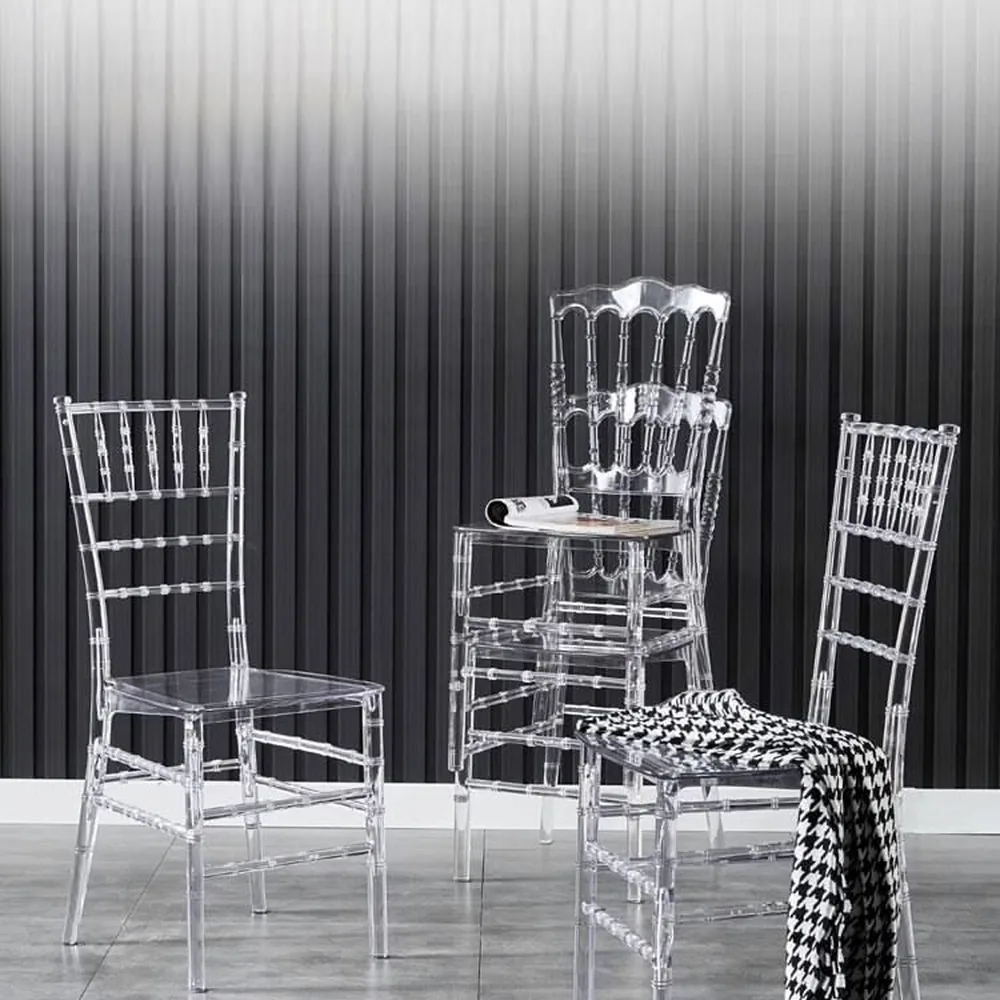
Stack height and what it does to the bottom chair
Published stack height is a marketing number, measured on a flat floor with new chairs and no lateral load. Safe stack height is a structural number, and it is always lower.
Three things reduce it:
- Floor flatness — a stack on an uneven floor leans, and a leaning stack puts a bending load on the frames
- Chair age — glides compress, welds fatigue, and the stack gets less stable every year
- How it is moved — a stack that is dragged or pushed is a stack that is failing
The working rule: take the published maximum and subtract two. At eight per stack, store seven. You lose a little floor space and gain a bottom chair that survives the season.
Trolleys, dollies and moving a full stack
Moving a stack is where most accidental damage is done, and it is almost always a wheel problem.
| Surface | Wheel that works | Wheel that fails |
|---|---|---|
| Carpet | Large soft-roll wheel, 100 mm and up | Small hard nylon — sinks and stops |
| Tile or stone | Soft rubber, non-marking | Hard plastic — chips grout and marks |
| Concrete | Pneumatic or large polyurethane | Small castors — jam on joints |
| Ramps and thresholds | Braked, with a wide track | Anything narrow — tips at the lip |
Two practical rules cover most situations. First, match the trolley to the load, not to the stack height — a trolley rated for 20 chairs carrying 30 is a trolley that will fail at the worst moment. Second, never move a stack taller than the trolley’s back rail. The rail exists to stop the stack folding forward, and a stack that is taller than the rail is a stack with no restraint.
Turning radius matters too. A full trolley needs about 1.5 m to turn without dragging the back wheels, which is more than most store rooms allow between the door and the first shelf.
Damp, heat and rust in off-season storage
Unheated store rooms are the single most common cause of “the chairs rusted in storage” complaints. The mechanism is condensation: warm daytime air, cold night surfaces, and moisture settling on the coldest metal in the room — which is usually the frame.
Four measures prevent most of it:
- Get the stack off the floor. A pallet or a slatted platform lets air move under the bottom chair.
- Leave a gap to the wall. About 10 cm is enough for air movement and stops the wall’s condensation reaching the frames.
- Do not seal the room completely. Some ventilation is better than none; a sealed cold room with a warm door opening is a moisture trap.
- Cover with breathable material, not plastic. Plastic sheeting traps condensation against the frame. A cotton sheet or a purpose-made breathable cover works.
In coastal or high-humidity sites, the practical solution is stainless or heavily coated hardware and a monthly inspection rather than a hope that the store room stays dry.
Cleaning and inspection cycle
The best moment to inspect a chair is the moment it comes out of the stack, not the moment it fails.
A short monthly routine catches almost everything:
- Feet and glides — worn flat, missing, or replaced with the wrong type
- Frame joints — movement, cracking paint at the weld, or a loose bolt
- Seat and back fixings — the screws that loosen first are always the same two
- Upholstery edges — the first place a cover splits is the front edge of the seat
Record what you find. A single column in a spreadsheet — date, stack, number of chairs pulled — turns a maintenance habit into a replacement forecast.
Planning storage space per hundred chairs
Storage is usually planned last and sized by whatever room is left. Sizing it properly takes about five minutes.
| Stack height | Floor footprint per 100 chairs | Clear height needed |
|---|---|---|
| 6 high | About 4.5 m² | 2.0 m |
| 8 high | About 3.4 m² | 2.5 m |
| 10 high | About 2.7 m² | 3.1 m |
| 12 high | About 2.3 m² | 3.7 m |
Add circulation space — roughly 40% on top of the footprint — for the trolley to get in, turn and unload. A room that fits the stacks but not the trolley is a room where chairs are carried by hand, two at a time, for the rest of the season.
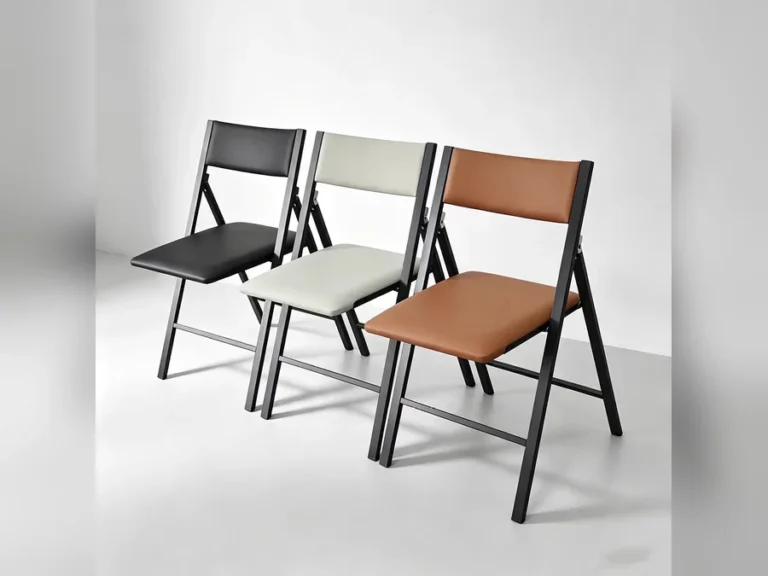
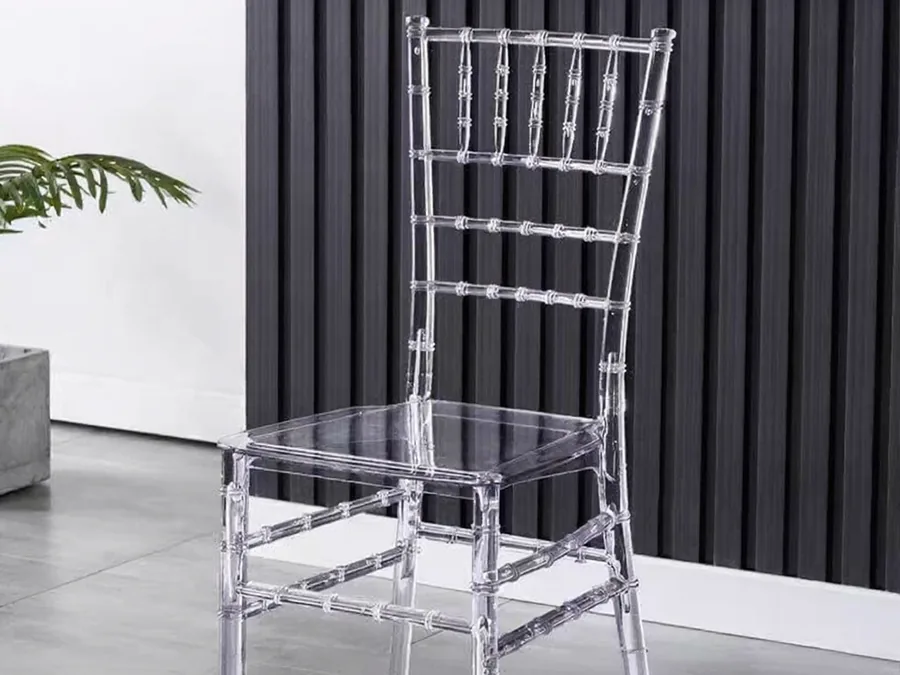
If the storage plan is being built alongside a new order, the banquet chairs range shows stack heights and trolley options per model, and folding chairs covers the alternative for rooms that need flatter storage. Where a project needs a specific packing pattern for a container or a phased delivery, ask about packing with your floor plan and we will come back with carton counts, stack heights and loading details. If the order quantities and delivery windows are still open, the guide to MOQ and lead time when importing dining furniture sets out what usually drives both.
Models from this range
If you are shortlisting for a project, these two pages show how the choices above look in production:
- stackable folding chairs — Portable Folding Chair for Office Meeting and Cafe
- stackable banquet chair stock — Commercial Banquet Dining Chair for Hotel Banquet Hall