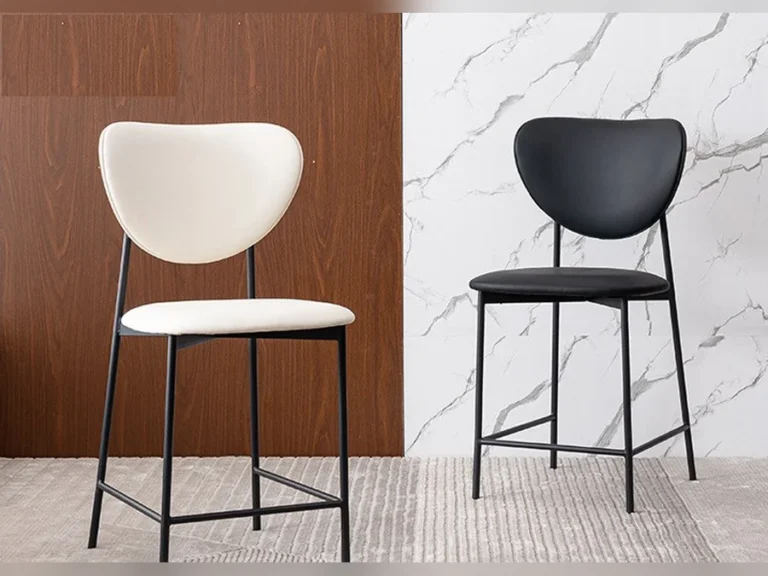
Event planners do not buy chairs. They buy chair-events — the number of times a chair can be set up, sat in, stacked, transported and set up again before it needs replacing.
That changes the arithmetic. The only price worth comparing is the purchase price divided by the events served, and the two numbers most buyers compare tell you almost nothing.
Estimating quantity for an event
Start from the room, then add the allowances that always get forgotten.
- Room capacity — the seated capacity of the space, from the floor plan.
- Add 5–10% for the last-minute guest list, which is never smaller than the confirmed one.
- Add a spare row — one row of 10–12 chairs covers damage and the extra table.
- Add the workshop count — chairs waiting to be cleaned or repaired are not available, so the fleet must be larger than the requirement.
Planners under-order in one specific way: they order to the biggest event of the year, then run several smaller events from the same fleet with no repair window in between. The fleet size should be sized to the peak plus the turnaround, not to the peak alone.
Transport and storage between events
Between two events, a chair is mostly a logistics problem. Three numbers decide how much labour that costs.
| Metric | Why it matters | What to ask |
|---|---|---|
| Chairs per trolley | Decides trips per event | Load rating and stack height the trolley accepts |
| Chairs per van or truck | Decides vehicle count and cost | Packing pattern and carton or stack dimensions |
| Folded thickness | Decides storage volume | Measured folded, not as advertised |
Packing decides labour time more than chair weight does. A stack that transfers from trolley to van without being unstacked saves two people an hour per event; a stack that has to be broken down and rebuilt costs the same hour twice.
Storage between events should keep the fleet presentable, not just dry. Stacked chairs with no covers collect dust in the seat crevices, and a dusty chair reads as a tired chair even when the frame is perfect.
Wear in a hire or venue fleet
A hundred events is a useful unit of measurement. Here is what it does:
- Hinges — the first component to develop play, usually visible as a wobble before it becomes a failure
- Feet and glides — worn flat, or missing entirely, which then wears the leg tube
- Seat fixings — the screws or rivets under the seat, loosened by being carried rather than sat in
- Seat surface — scuffed at the edges from stacking, not from use
The parts that should be replaceable are exactly those four. A chair with a replaceable glide, rivet and seat pad has a service life measured in events; one built as a sealed unit has a service life measured in deliveries.
Choosing for repeated setup and teardown
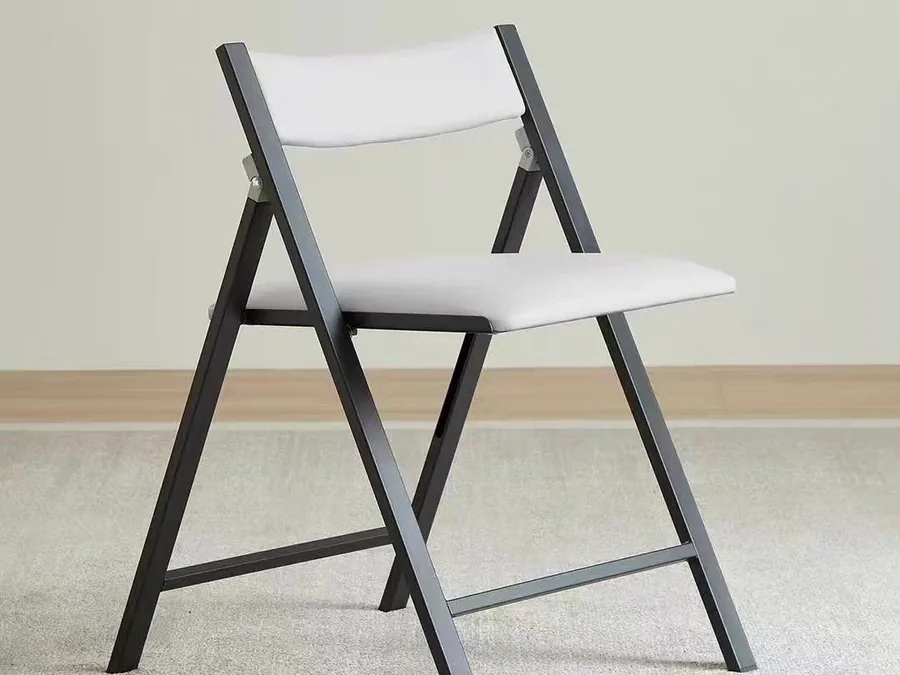
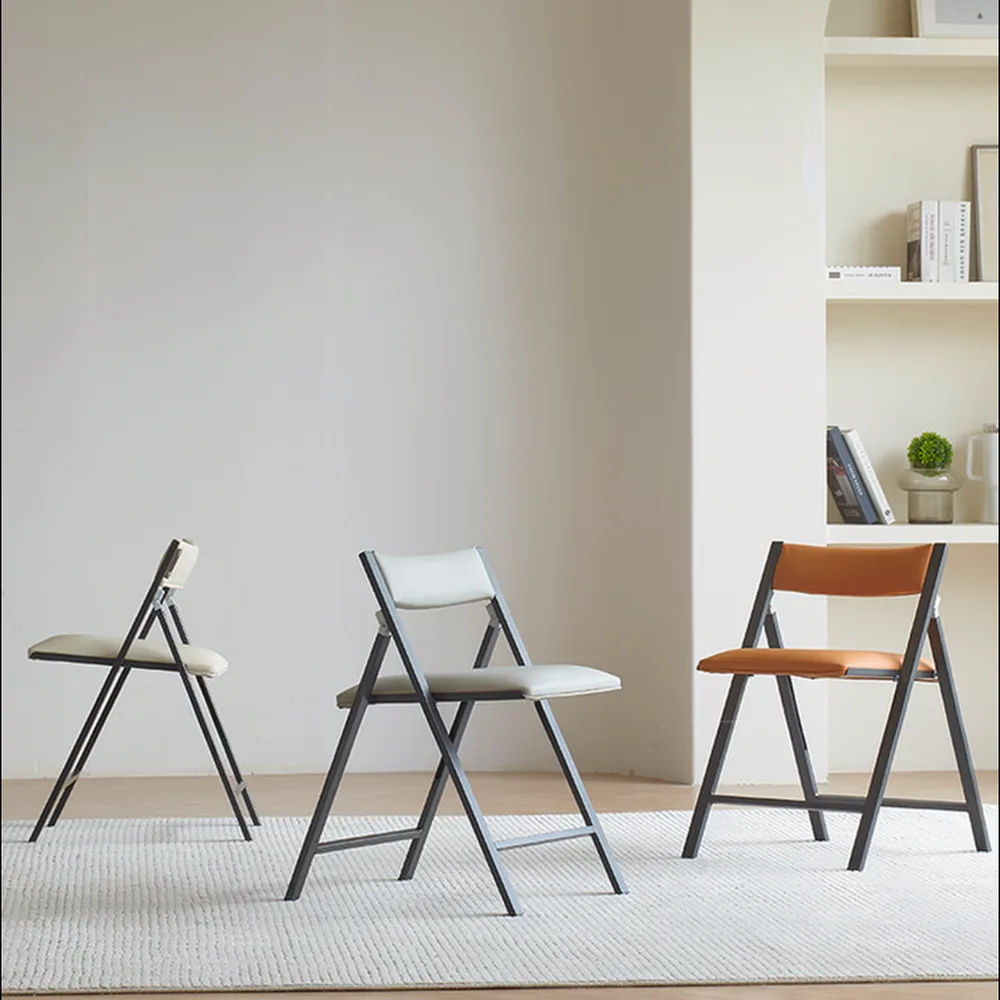
Folding chairs are handled by staff, repeatedly, often at the end of a long day.
- Weight per chair matters more than it looks: 1 kg lighter across 300 chairs is 300 kg of lifting per event.
- Fold action — a single-motion fold that locks open is faster and safer than a two-step mechanism, and it does not pinch fingers.
- Stack behaviour — chairs that nest into a stable stack move faster than chairs that balance.
- Noise — metal-on-metal contact in a stack is loud in a quiet venue. Plastic or rubber separators solve it.
For a two-person team setting up 200 seats, those four details are worth more than any finish option.
Cost per event, not cost per chair
The comparison that matters:
Cost per event = purchase price ÷ (events per year × years of service)
A chair at 30 that survives 60 events costs 0.50 per event. A chair at 20 that survives 25 events costs 0.80. The cheaper chair is 60% more expensive in service, and that is before the labour cost of replacing it mid-season.
Run the same maths on the spares: a set of glides costing a few cents each, replaced once a year, is cheaper than the labour of pulling a chair out of service.
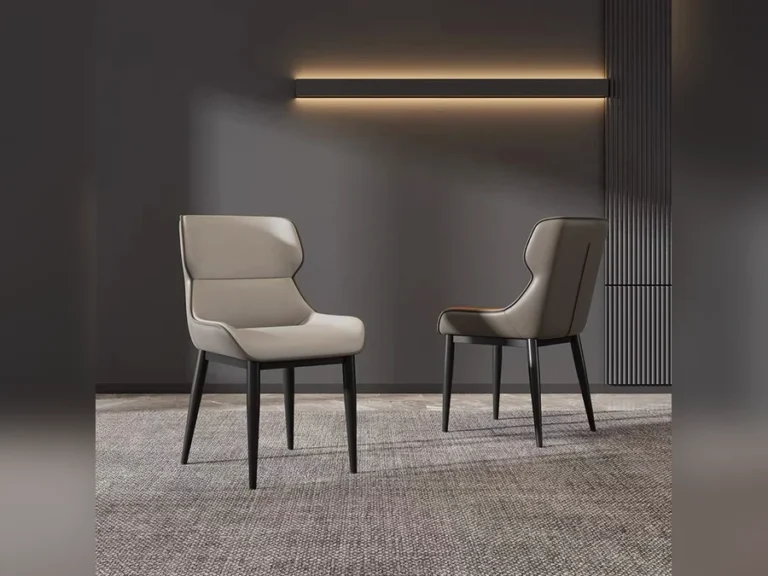
If the event mix includes formal seating, banquet chairs covers the upholstered alternative and stacks to a similar height. Our guide to folding chair load ratings explains how to read the capacity figure before comparing models, and the folding chairs range lists folded thickness and stack height per model. To plan an event order, send the peak head count and the number of events per year and we will come back with a fleet size and spare-parts list.
Models from this range
If you are shortlisting for a project, these two pages show how the choices above look in production:
- folding chairs for conference use — Portable Folding Leather Chair for Office and Events
- banquet seating for event venues — Commercial Banquet Dining Chair for Hotel Banquet Hall