Ask three suppliers for a bistro table and you will get three different products: a 60 cm round at 70 cm high, a 70 cm square at 75 cm high, and a tall poseur at 105 cm with a stool package attached.
The words are not standardised. The dimensions are, which is why the specification should start there.
Where the two names come from
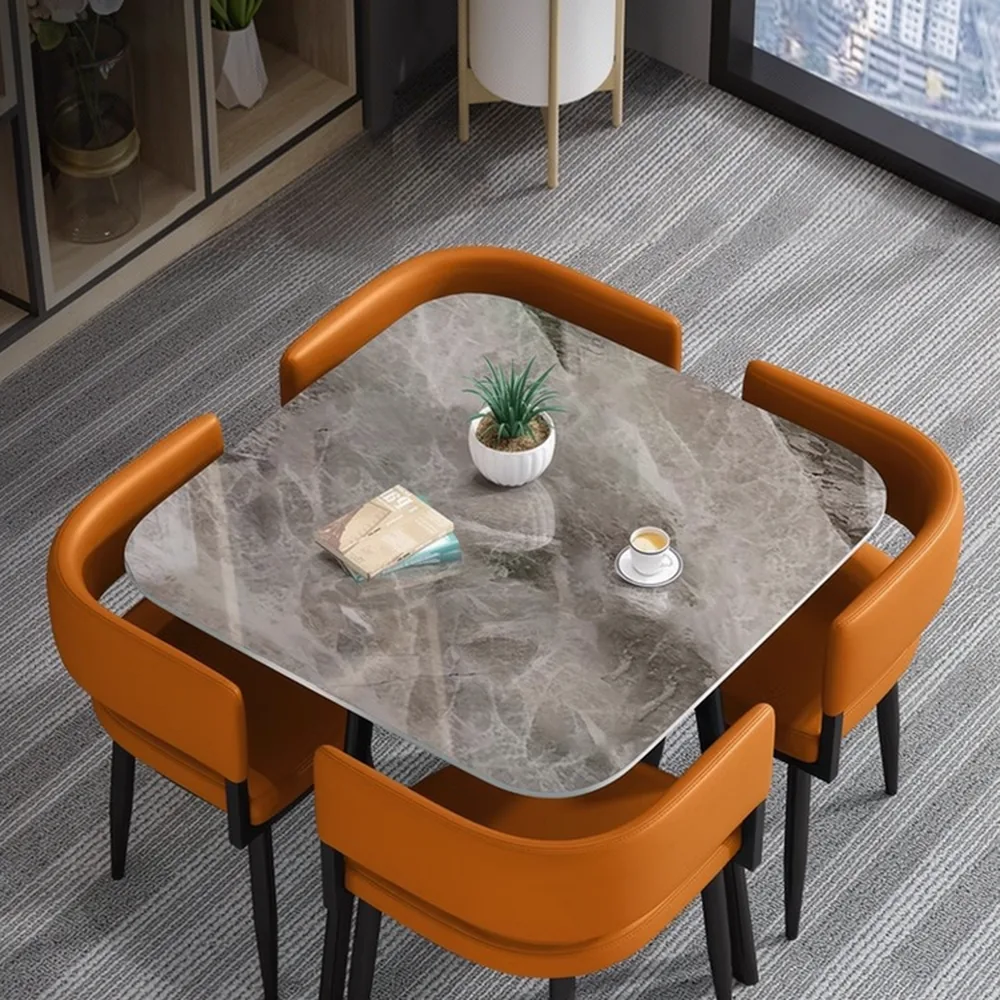
Bistro comes from the French café tradition: small, round, close to the door, built for a coffee and a short stay. The defining feature is not the shape but the size — a table for two, in a footprint that lets the room hold more covers.
Cafe is the broader term. It covers square and rectangular tables, larger rounds, and anything that seats two to four in a casual setting. A bistro table is a type of cafe table; not every cafe table is a bistro table.
In practice, the difference buyers care about is this: a bistro table is optimised for density, a cafe table for flexibility. If the room needs to seat as many people as possible in a small footprint, bistro wins. If the room needs to reconfigure between service periods, square cafe tables push together better.
Height and size differences that matter
| Type | Typical height | Typical top size | Seats | Pairs with |
|---|---|---|---|---|
| Bistro | 70–75 cm | 60–70 cm round | 2 | Dining chair at 45 cm seat |
| Cafe (square) | 75 cm | 70–80 cm square | 2–4 | Dining chair at 45 cm seat |
| Cafe (rectangular) | 75 cm | 120 × 70 cm | 4 | Dining chair at 45 cm seat |
| Cocktail / poseur | 105–110 cm | 60–70 cm round or square | Standing, or 2 with stools | Stool at 75 cm seat |
| Side table | 45–55 cm | 40–50 cm | 0 | Sofa or lounge chair |
Two numbers decide the room: the table height and the seat height that pairs with it. A 75 cm table with a 45 cm chair gives a 30 cm gap, which is comfortable. The same table with a 50 cm chair gives 25 cm, which starts to feel tight under the table edge.
Floor space is the other half of the calculation. A two-seat bistro table needs roughly 60 × 60 cm for the table plus 50 cm of pull-out space on each occupied side — about 1.6 m² in total once chairs and circulation are counted. That is why a room full of bistro tables seats more people than the same room full of squares: the shape lets the chairs tuck in.
Base types and stability
The base decides whether a small table feels solid, and it is the part buyers look at least.
- Pedestal (single column) — the best legroom, and the best choice for small rounds. Stability depends on the base plate diameter and weight; a light plate on a 70 cm top will wobble.
- Cross base — folds flat for storage and handles uneven floors better. Common on outdoor and terrace sets.
- Four-leg — the most stable and the most legroom-hungry. Right for squares and rectangles, wrong for a 60 cm round where guests will straddle a leg.
- Trestle — for long communal tables, not for small bistro settings.
What makes a small table feel unstable is rarely the top. It is the ratio between the base plate and the top diameter, plus the tightness of the fixing. A 60 cm top on a 40 cm base plate will tip if someone leans on the edge; the same top on a 50 cm weighted plate will not.
Two more options buyers mix up
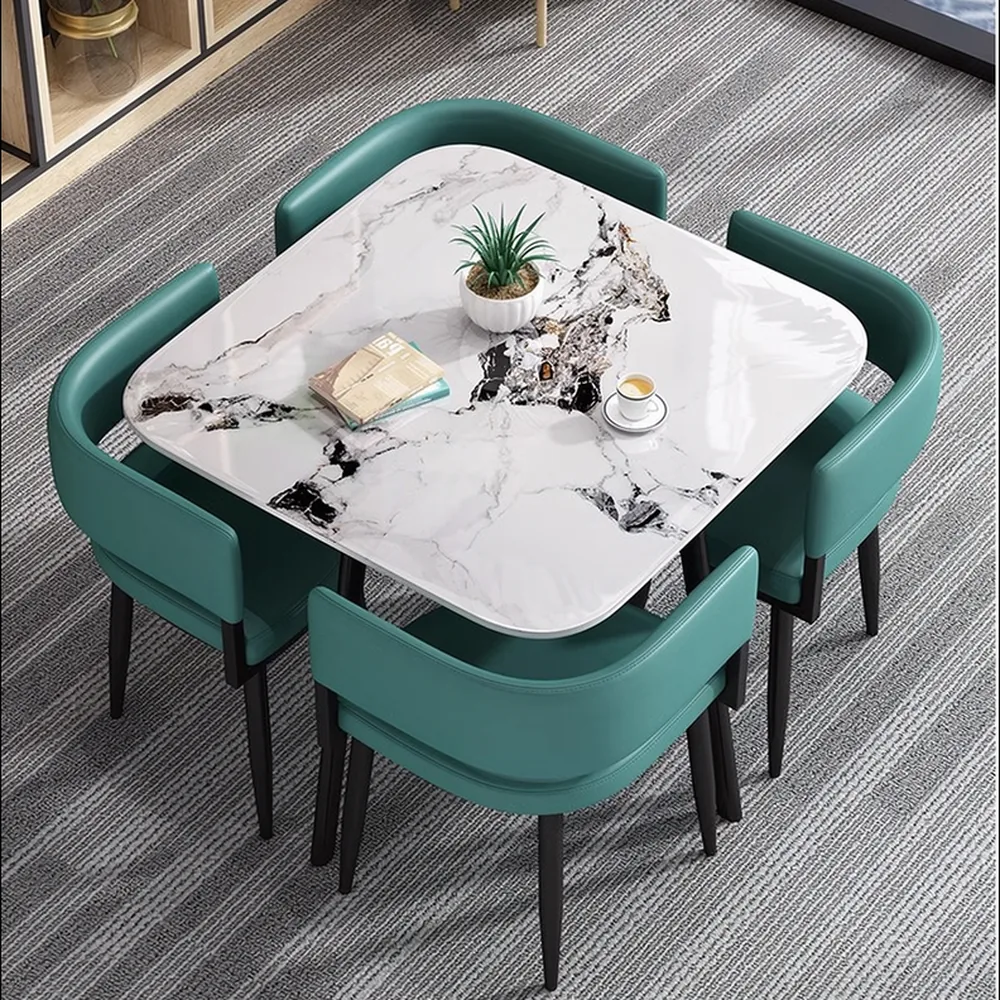
Side tables (45–55 cm high) are for sofas and lounge chairs, not for dining. They are frequently ordered as “small cafe tables” and then arrive too low to eat at. If the seat is 45 cm, a 50 cm table is not a table — it is a side table.
Cocktail tables (105–110 cm) are for standing events. They pair with a 75 cm stool, not a dining chair, and they are the right answer for a bar area that needs perching space without a full dining footprint.
Both are legitimate products. The mistake is ordering one when the room needs the other, which is why the seat height should be decided before the table is chosen.
Matching tables to chairs and stools
Keep one rule across the whole layout: the height pair must be consistent, even when the table types are not.
- Dining height: table 75 cm, seat 45 cm
- Counter height: table 90 cm, seat 60–65 cm
- Bar height: table 105–110 cm, seat 75 cm
A room can mix bistro rounds and square cafe tables at the same 75 cm height without any problem — the guest experience is identical. It cannot mix a 75 cm table with a 65 cm stool, because the gap becomes 10 cm and the table stops working.
If the layout includes lounge seating, coffee and side tables covers the low tables that pair with sofas, and dining tables covers the full-height range. Our bar stool height guide settles the counter and bar pairs, and you can review table options by shape and base type. Send us the floor plan with seat heights marked and we will confirm the pairing before anything is ordered.
Models from this range
If you are shortlisting for a project, these two pages show how the choices above look in production:
- tulip base bistro tables — Light Luxury Tulip Sintered Stone Bistro Table
- round bistro tables for cafes — Nordic Round Sintered Stone Bistro Table for Reception Room