A wooden stool is ordered for how it looks and judged on how it sounds, how it moves and how it ages. None of those appear on a specification sheet, and all three are decided by dimensions you can write down.
Start with height. Everything else follows.
Height bands for wooden stools
Wooden stools come in the same three bands as any other seating, and the band is decided by the surface they serve, not by preference.
| Band | Seat height | Pairs with | Typical use |
|---|---|---|---|
| Dining | 43–46 cm | Table at 75 cm | Communal tables, bench-height seating |
| Counter | 60–66 cm | Counter at 90 cm | Café counters, kitchen islands |
| Bar | 73–78 cm | Bar at 105–110 cm | Hotel bars, pub bars, poseur tables |
| Extra tall | 82–88 cm | Poseur at 115–120 cm | Standing events, high cocktail tables |
The gap rule holds across all four: 25–30 cm between the seat and the underside of the surface. A 65 cm wooden stool at a 90 cm counter gives 25 cm, which is the tight end of comfortable. A 60 cm stool at the same counter gives 30 cm, which is the relaxed end.
Where a lower stool is the better choice: rooms that mix standing and sitting, and venues where the stool is also pulled up to a 75 cm table. A 45 cm stool does both jobs; a 65 cm stool only does one.
Wood versus metal stools, on the practical dimensions
The comparison buyers actually make is not aesthetic. It is about four things that show up in service.
| Dimension | Solid wood | Metal (steel or aluminium) |
|---|---|---|
| Weight | Heavier per seat; 4–6 kg typical for a bar stool | Lighter; 3–4 kg for the same height |
| Sound | Quiet on the floor, quiet when moved | Rings when knocked; glides decide how much |
| Feel | Warm, does not feel cold through clothing | Cold at the seat edge unless upholstered |
| Repairability | Joints can be re-glued; a split leg is difficult | Welds can be re-welded; parts are replaceable |
| Ageing | Patina, then wear at the foot and seat edge | Coating wears through at the contact points |
| Floor interaction | Hard feet mark timber floors; felt glides solve it | Hard glides chip tile grout |
One practical note that rarely appears in comparisons: a solid wood stool on a timber floor transmits impact noise through the structure. In a first-floor restaurant above a retail unit, that is a real constraint, and rubber or felt glides are not optional.
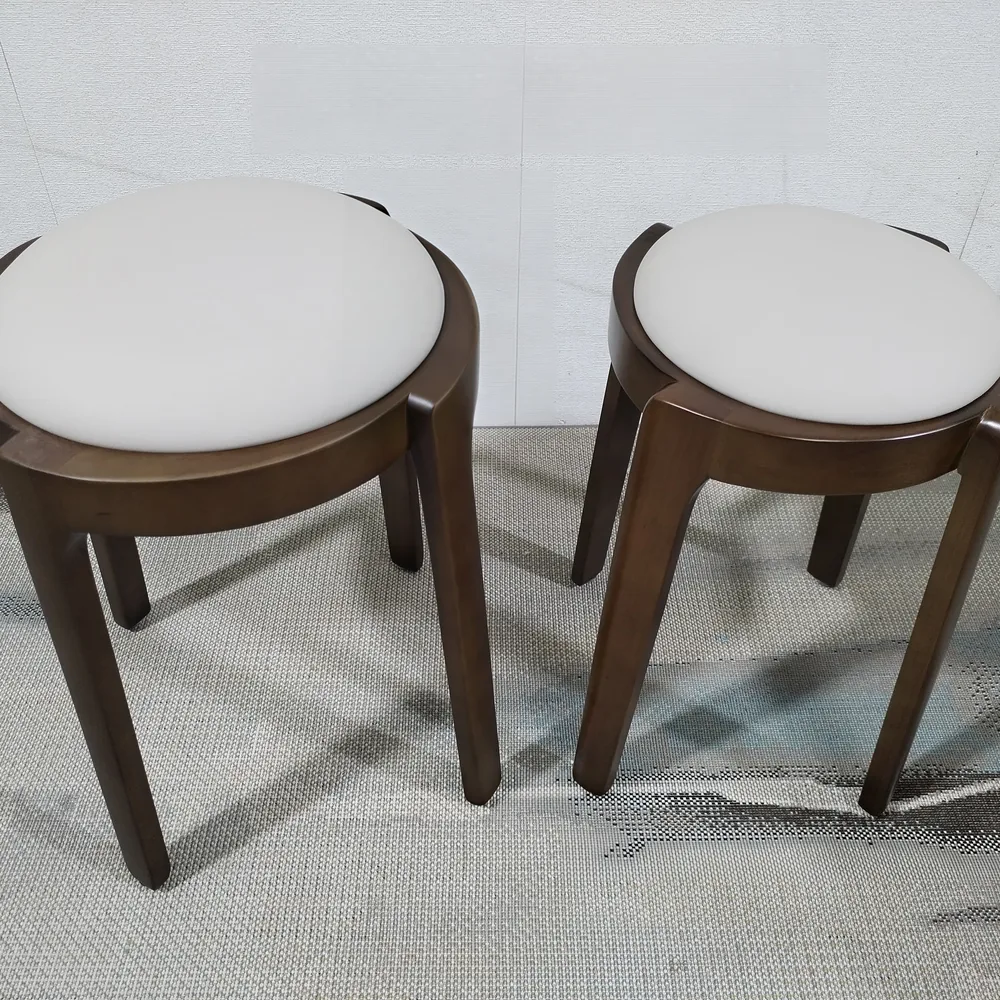
Timber and finish choices
Four species cover most commercial wooden stools, and they behave differently under the same finish.
- Oak — hard, open grain, takes impact well; the standard for heavy commercial use
- Ash — similar hardness with a straighter grain; bends well for curved seats
- Beech — dense and uniform, common in café furniture; less tolerant of moisture
- Rubberwood — economical, softer, best for lighter-duty or indoor-only use
Two numbers matter more than the species name:
- Moisture content at production — 8–12% for most markets. Wood dried to a higher figure will move after delivery, and movement is what opens joints.
- Finish system — a catalysed lacquer or a hard-wax oil. Lacquer gives a uniform film that wipes clean; oil penetrates and can be spot-repaired but needs re-oiling.
For a room that gets wiped down nightly, the finish matters more than the species. A well-finished beech stool outperforms a poorly finished oak one.
Stability, footrests and the frame
Three frame decisions decide whether a wooden stool feels solid after two years.
Leg splay. Straight legs are stronger in compression; splayed legs are more stable against tipping. For a tall stool, a modest splay is worth the extra material.
Racking. The failure mode of a wooden stool is not a broken leg — it is the frame going out of square, one joint at a time. Corner blocks or stretchers prevent it. A stool with no stretcher between the legs will rack within a season in a busy room.
Footrest height. At bar height, the footrest should sit roughly 40–45 cm below the seat. Too low and guests cannot reach it; too high and the stool becomes a step. On a wooden stool, the footrest is also a structural stretcher, which is why removing it to “clean up the look” is a bad idea.
Specifying a wooden stool order
A short comparison sheet, filled in per model, prevents most returns:
| Field | What to record |
|---|---|
| Seat height | Finished height, measured to the top of the seat |
| Overall footprint | Leg spread at floor level, not at the seat |
| Weight | Per stool, for freight and for handling |
| Timber and moisture content | Species and the % at production |
| Finish | System name and sheen level |
| Footrest height | From floor to the top of the rest |
| Glide type | Felt, nylon or rubber, matched to the floor |
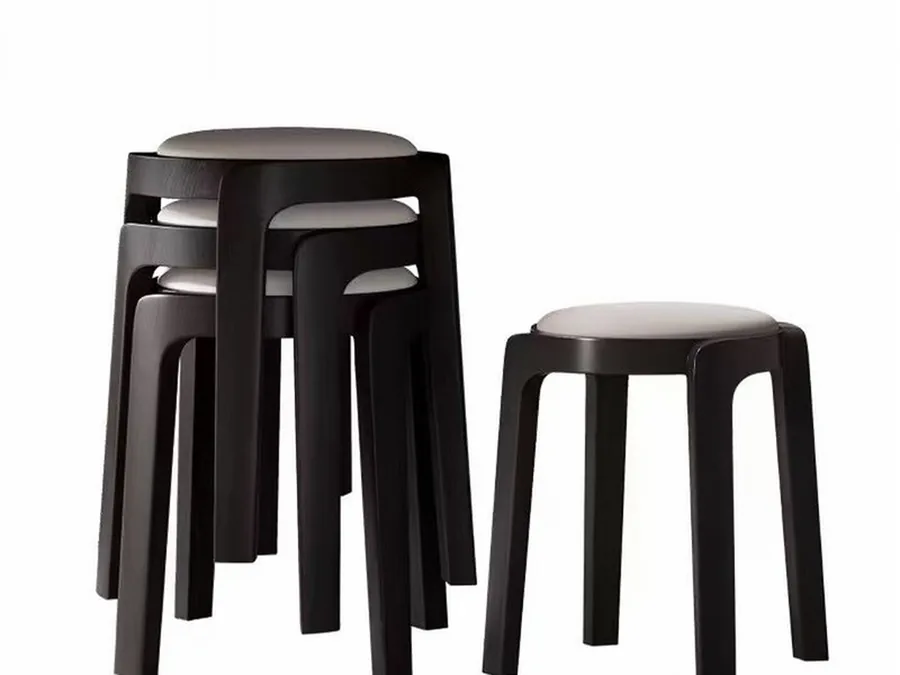
| Stackability | Whether it stacks, and to what height |
If the room mixes stool heights, our bar stool height guide covers the measuring method for counters and bars, and the wooden stools range lists seat height and timber per model. Solid wood dining chairs follows the same joinery logic at dining height, and bar stools covers the metal alternative at the same heights. To ask about timber options, send the seat height, the floor type and the finish direction and we will come back with the matching models.
If the stool height is going into a specification, quote the measurement method as well as the number; ISO publishes the dimensional conventions buyers and inspectors work to.
Models from this range
If you are shortlisting for a project, these two pages show how the choices above look in production:
- solid wood bar stools at bar height — Nordic Solid Wood Bar Stool for Kitchen and Restaurant
- stackable wooden stools — Stackable Solid Wood Square Stool for Dining and Living Room